Long limb rivering
Palms shuttle oil along thighs and calves so cloth never scrapes parched skin mid-session.
Layers of warm oil with slow, sweeping contact—for cocooned skin after dryness, softer nervous-system pacing, and ritual tempo minus sports-table aggression.
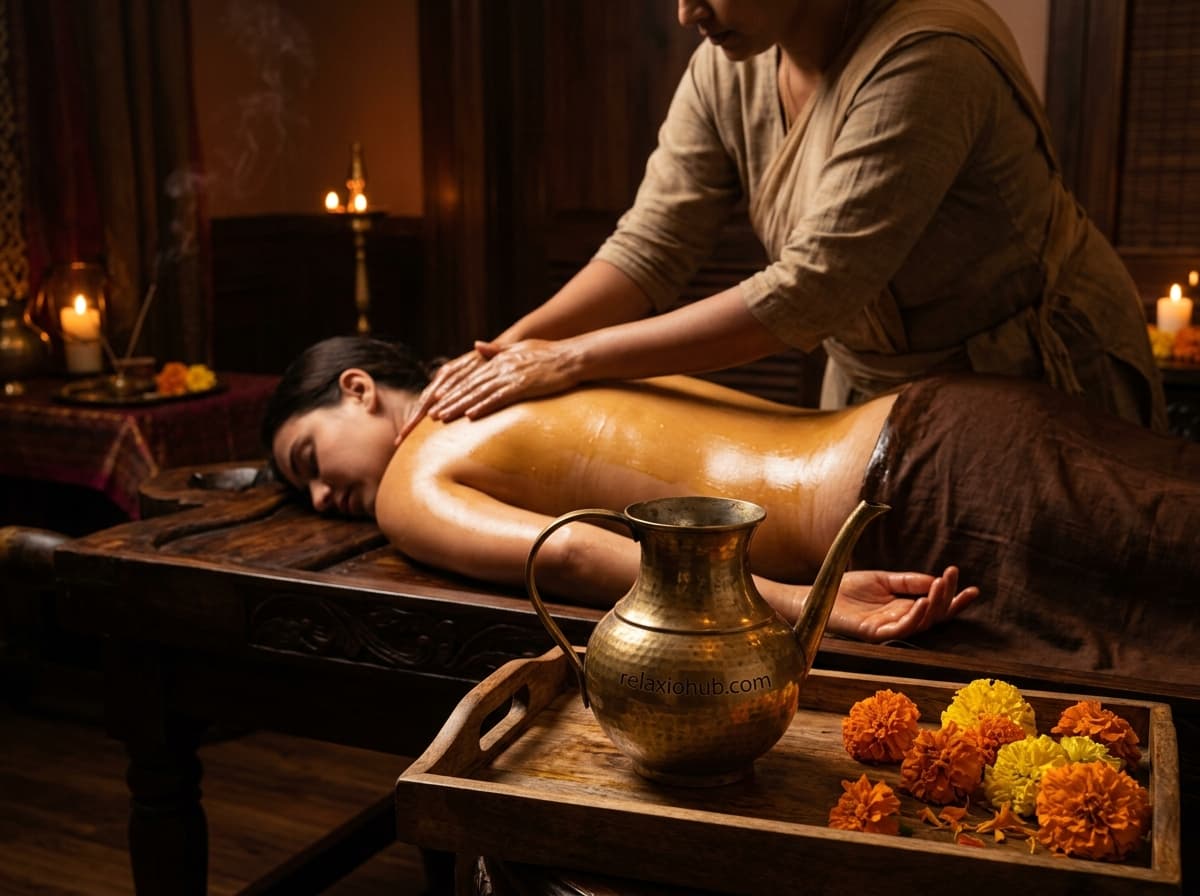
Massage overview
Abhyanga stems from Ayurvedic daily-body-care ideals and in modern studios usually arrives as a slow, full-length session with abundant warmed vegetable oil. Therapists glide palms along limbs, spine, and neck using long strokes and broad circles, sometimes layering gentle kneading once skin is slick—sensations skew toward deep warming and wraparound hydration rather than dry pinpoint pressure.
Oil recipes vary: neutral coconut or almond bases, warming sesame blends, occasionally fragrant artisan mixes. This is not clinical Panchakarma prescribing or unsupervised dosha diagnosis—in a salon setting, the focus is on: skin barrier care, nervous-system easing, and muscular ease after stress.
Guests often pick Abhyanga for winter dryness, post-flight drag, nervous overload, or when classic massage feels too powder-dry. Fever, purulent skin outbreaks, open wounds, or pregnancy without obstetric alignment mean postpone booking.
At a glance
Technique
Lineages disagree on micro-details, yet three anchors remain: heated oil, elongated pathways, zero snapping moves.
Palms shuttle oil along thighs and calves so cloth never scrapes parched skin mid-session.
Expansive loops beside vertebrae and ribs loosen desk-held stiffness.
Once lubricated, traps and calves receive moderate kneading without dry friction burn.
Feet and hands get mindful circles so extremities feel included in the arc.
Wide finishing passes or a tucked blanket pause lets heat integrate before standing.
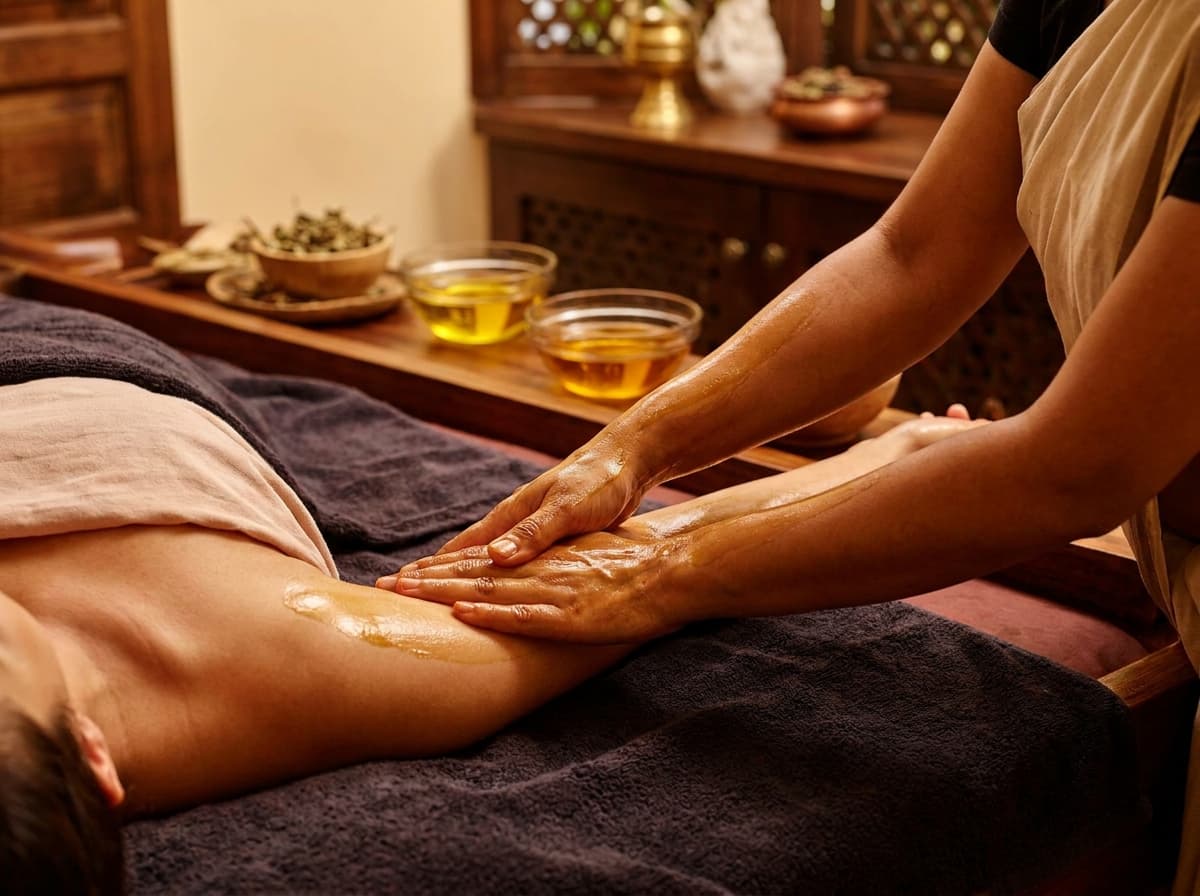
Effect
Keep expectations in wellness territory: skin comfort and calmer nerves, not disease-cure promises.
Warm oil softens tight epidermis after aggressive AC or windy commutes.
Slow pacing frequently helps hypervigilant systems exhale deeper.
Post-travel or gym routines may feel less wooden—without brutal soreness.
Dosha guessing, detox miracles, or MD substitution stay outside ethical spa marketing.
Process
Discuss nut allergies, essential oils, pregnancy, rashes, and recent burns.
Therapists paint warmed oil in passes, sequencing limbs or torso first per studio habit.
Brief rest wrapped in linens; follow studio guidance—rinse, blot, or wear-home oil sheen.
Choosing the format
Searchers confuse Abhyanga with generic oil Swedish or spa wraps. Three grounded picks.
Start with a neutral, lightly scented carrier oil before experimenting with perfumed blends.
Choose full-duration quiet sessions over chatty express bookings.
Predictable warmth can reset subjective circadian comfort—not a medical jet-lag cure.
Heat plus glide can worsen acute dermatologic infections, systemic fever states, and several vascular issues without clearance.
FAQ
Classic sessions may target zones faster with modest oil. Abhyanga foregrounds slow full-body coverage, generous warmed oil, and less sports-style stripping.
Studio-dependent: some cherish residual silkiness overnight; others steer you to rinse—confirm when booking.
Only after individualized obstetric clearance plus therapist expertise on pressure, positions, and oil composition.
Maintenance every 3-5 weeks is typical; severely dry skin occasionally warrants tighter spacing per therapist advice.
Speak up pre-session—many bases use almond or sesame; spas should substitute hypoallergenic carriers or decline if risk remains.
Sesame is warming and dense—suits dry or normal skin in cooler months. Coconut is neutral and mildly cooling, a practical choice for sensitive or reactive skin. Almond is similarly neutral with a lighter texture. On a first visit, confirm the exact oil and ask for a small patch test if you have any nut food allergies.
A generous oil layer saturates skin thoroughly—adding exfoliation, wraps, or deep-tissue work the same day risks overloading both skin barrier and nervous system. Spacing a second treatment 24–48 hours later allows the body to absorb the session's full effect rather than stacking stimuli.
Choose your city on the home page and browse profiles listing Abhyanga or Ayurvedic oil techniques.